
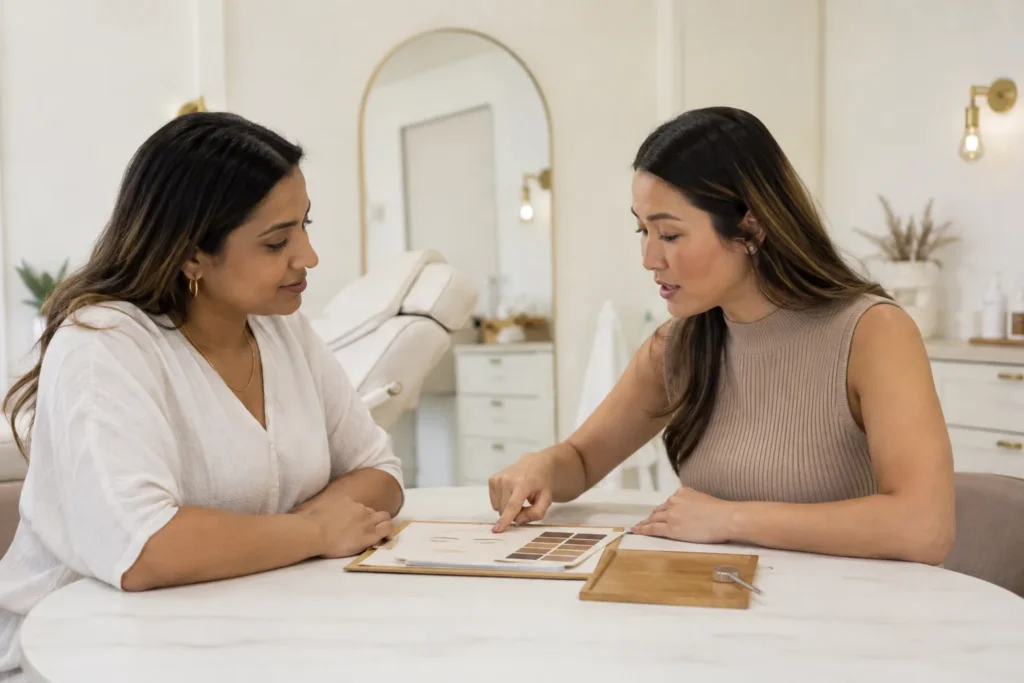
A practical starting point for clients, learners and practitioners navigating permanent makeup, cosmetic tattooing and micropigmentation. Choose the question you need answered rather than relying on a title, trend or certificate image alone.
What the main terms mean
- Permanent makeup (PMU)
- An umbrella term commonly used for cosmetic tattoo procedures such as brows, eyeliner and lip colour.
- Micropigmentation
- Another broad term for implanting pigment for cosmetic or restorative appearance. Legal definitions vary by location.
- Cosmetic tattooing
- A plain-language description that makes the relationship to tattooing clear; it does not define legal permission.
- Microblading
- A manual brow method within cosmetic tattooing. It requires method-specific competence and is not suitable for every person or objective.
- Machine brows
- A group of machine-applied approaches that may be described as powder, shaded, pixel or machine hairstroke techniques.
- Restorative or paramedical tattooing
- Services connected to appearance after surgery, injury or a health condition. The title must not imply medical status, and additional competence, referral or healthcare collaboration may be required.
Choose the procedure you are considering
Permanent eyebrows
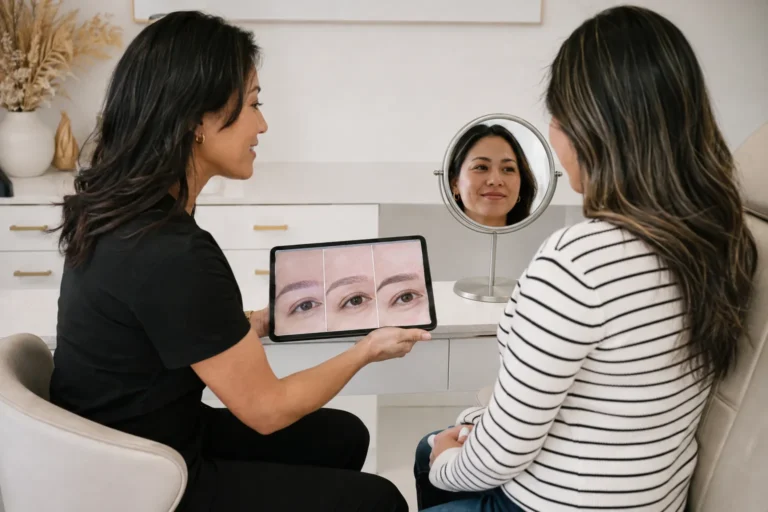
Compare manual and machine approaches, approve the design and ask for relevant healed evidence.
Open the brows guidePermanent eyeliner
Use an eye-area-specific consultation covering the intended style, products, scope and reasons to pause or refer.
Open the eyeliner guidePermanent lip colour
Discuss natural lip boundaries, colour objectives, healing visibility, health questions and follow-up without outcome promises.
Open the lip guideChoose your route
Planning a consultation
Prepare the questions, records and separate consent choices that support an informed decision.
Use the consultation guideComparing results
Understand why fresh and healed photographs answer different questions and how to examine portfolio evidence.
Review healed-result guidanceChecking pigments and products
Ask for product identity, intended use, packaging, batch or lot, expiry, storage and client-record traceability.
Open traceability guidanceChoosing PMU training
Compare curriculum, supervision, practical progression, assessment, learner rights and trainer evidence.
Check a PMU courseConsidering correction or removal
Pause, gather records and separate correction, removal, referral and healthcare questions before another procedure.
Use the decision guideProfessional standards
Read BAQA’s scoped permanent makeup practice framework and its document-control status.
Read PMU standardsA safer decision flow
- Name the exact serviceBrows, eyeliner, lips, microblading, SMP and restorative work require different questions and evidence.
- Check the person and placeVerify the claimed BAQA record and the current permission, premises and insurance requirements where the service occurs.
- Compare relevant workLook for the practitioner’s own clearly described fresh and healed examples for the requested service.
- Complete a real consultationDiscuss objectives, limits, products, price, follow-up, records and reasons to pause or refer.
- Consent without pressureTreatment, photography and marketing choices should be understandable and separable.
- Keep the record and follow-up routeRetain product and treatment details, written aftercare and a clear route for questions or concerns.
Guidance edition: 1.0. Reviewed: . Review sooner if material evidence, product information or law changes.