

A PMU consultation should help both client and practitioner decide whether to proceed, change the plan, postpone or refer. It is more than selecting a shape and paying a deposit.
Clarify the service and objective
- Name the exact technique and treatment area instead of relying only on a trend name.
- Discuss the desired appearance, the practitioner’s relevant scope and alternatives that may better match the objective.
- Identify existing cosmetic tattooing, scar tissue or previous removal before a new design is agreed.
- Explain the likely session structure, total price, follow-up policy and what is not included.
Review suitability privately
- Use an appropriate private intake process for information relevant to the proposed service.
- Explain why a question is asked and collect only information needed for a lawful, defined purpose.
- Pause or refer when the practitioner cannot responsibly resolve a suitability, medication, skin or healing question.
- Do not promise that a patch or sensitivity test predicts every possible reaction.
Agree design, colour and limits
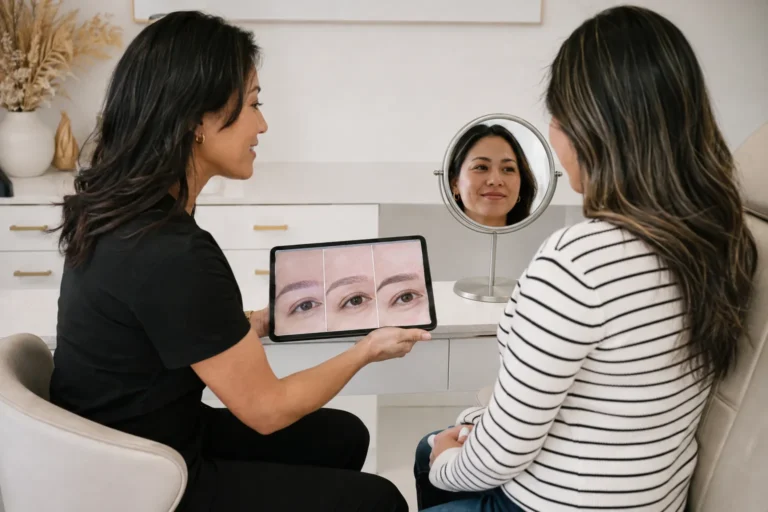
- Document the agreed design and obtain approval before the procedure begins.
- Discuss colour choice using the client, existing pigment, skin and likely change over time—not a one-size-fits-all chart.
- Explain that fresh appearance and healed appearance differ and that retention and fading vary.
- Avoid guaranteed symmetry, permanence, exact retention or identical results to another person.
Separate the permissions
- Treatment consent should identify the procedure, material risks, limits, aftercare and opportunity to ask questions.
- Photography needed for the treatment record should be explained separately from public portfolio or marketing use.
- A client should be able to decline optional marketing use without being pressured into the procedure.
- Age, identity, guardian consent and cooling-off rules must follow the requirements where the service is delivered.

Important boundary: This is general education, not an individual suitability decision, diagnosis, treatment plan or legal opinion. Permanent makeup and related services interact with living tissue. Practitioners must work within their training, insurance and local permission; clients with symptoms or health questions should use an appropriate healthcare service.
Guidance edition: 1.0. Reviewed: . Review sooner if material evidence, product information or law changes.