
Permanent eyebrow services include different manual and machine methods. Choose by the practitioner’s assessed scope, consultation, design control and relevant healed work—not by a fashionable technique name.
Questions to settle before treatment
Which method?
Ask whether the plan uses a manual method, machine shading, machine hairstrokes or a combination. The label alone does not establish suitability or competence.
Whose design?
Discuss the objective, natural brow pattern, existing pigment and reasonable limits. Approve the pre-draw while upright and able to ask for changes without pressure.
Which evidence?
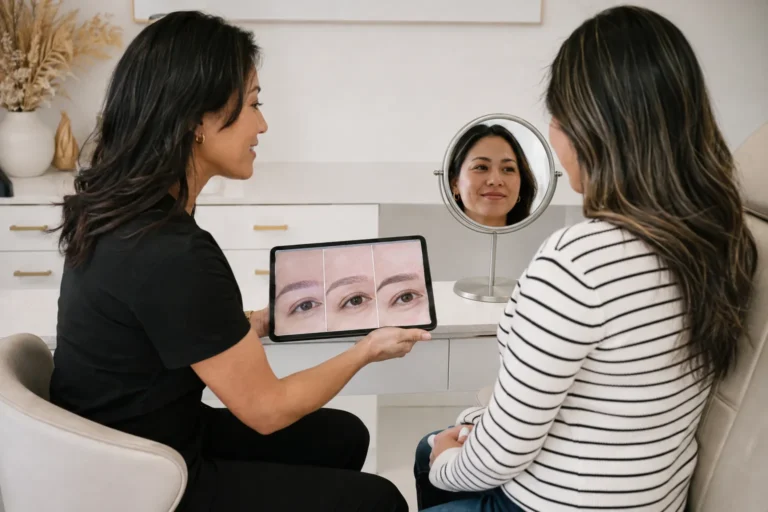
Review the practitioner’s own fresh and healed examples for the proposed method and a range of relevant skin and brow presentations.
What changes?
Fresh work can look different while settling. Colour, edge definition and retention vary; no photograph or test can guarantee an identical individual result.
What is included?
Confirm the total price, planned sessions, follow-up policy, circumstances requiring reassessment and who holds the treatment and product record.
When should the plan stop?
Pause for unresolved suitability questions, symptoms, damaged tissue, unclear existing pigment or a request outside the practitioner’s scope, insurance or local permission.
Misleading claims to challenge
- “Semi-permanent” used to imply that cosmetic tattooing carries no long-term consequence.
- Guaranteed symmetry, colour, retention or painless treatment.
- One brow certificate presented as proof of every manual and machine method.
- Unlabelled stock, borrowed, filtered or immediately completed images presented as healed personal work.
Guidance edition: 1.0. Reviewed: . Review sooner if material evidence, product information or law changes.