
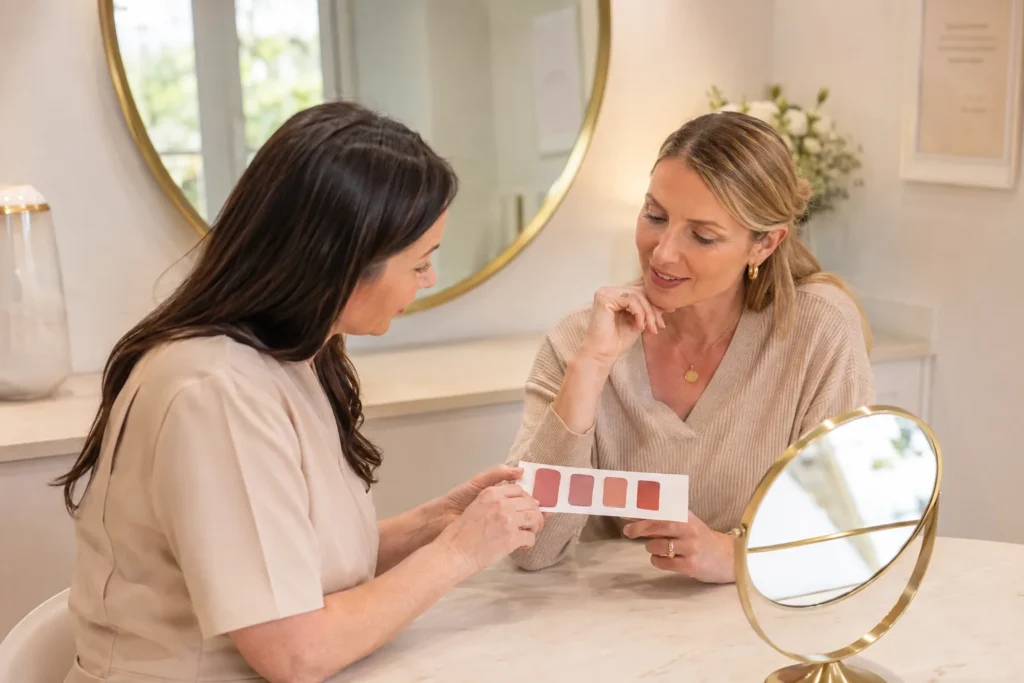
Permanent lip colour is cosmetic tattooing of a highly visible treatment area. A responsible plan covers natural boundaries, colour objectives, health questions, visible healing, future change and the possibility that the requested outcome is not appropriate.
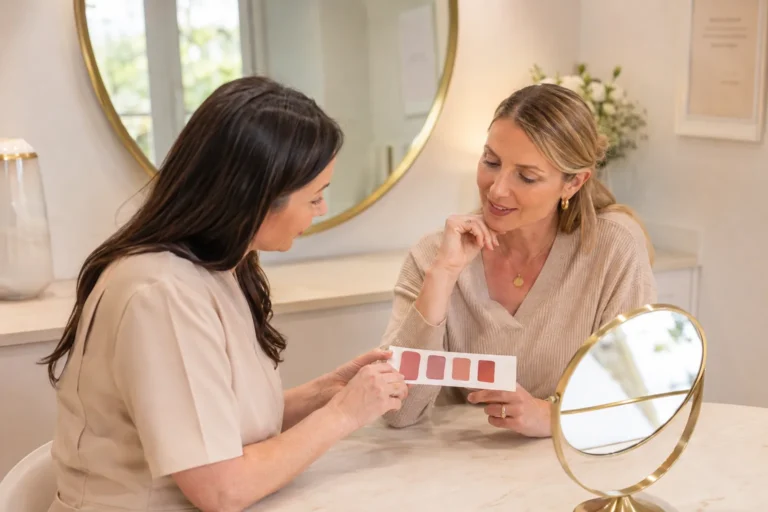
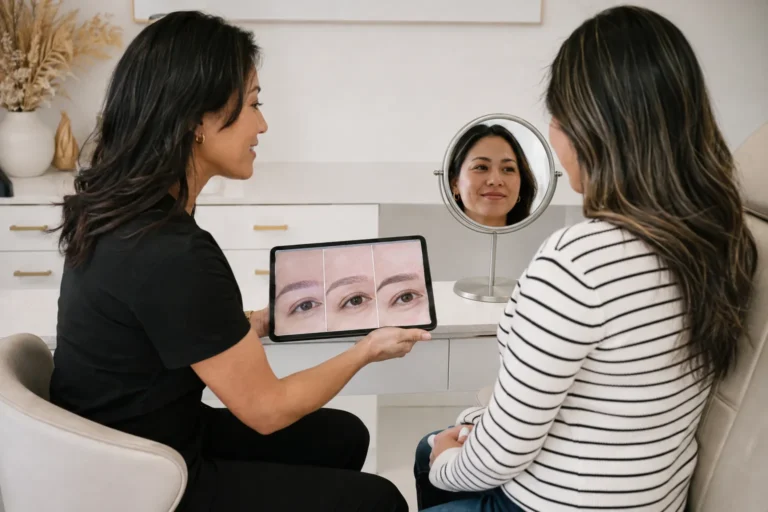
Before choosing permanent lip colour
Objective and boundary
Separate colour enhancement from requests to change anatomy or treat a condition. Agree the intended area and understand when work outside the natural lip requires different caution or should be declined.
Relevant history
Provide truthful information about prior lip procedures, reactions, healing, symptoms and relevant health history. If a healthcare question arises, use an appropriate healthcare professional rather than seeking diagnosis from the artist.
Colour discussion
Review the practitioner’s own healed examples and discuss existing lip colour, previous pigment and realistic uncertainty. A swatch or fresh photograph cannot guarantee the healed colour.
Timing and visibility
Discuss expected visible change, aftercare responsibilities and why the service should not be scheduled around an important event without allowing for uncertainty.
Products and records
Ask what pigments, cartridges and other relevant products will be used and how their identity, batch or lot and expiry information will connect to your record.
Follow-up and escalation
Know when routine review occurs, what additional work may be considered, what is included in the price and how unexpected or worsening concerns are escalated.
High-risk promises
- Guaranteed fuller lips, perfect symmetry or correction of a health-related appearance.
- A guaranteed shade, fixed healing timetable or “no swelling” promise.
- Medicine-specific instructions from someone without the relevant professional authority.
- Proceeding over unexplained symptoms, damaged tissue or an unresolved suitability question.
Guidance edition: 1.0. Reviewed: . Review sooner if material evidence, product information or law changes.