How BAQA levels work: This is a BAQA professional standard level used to describe expected learning depth and competence. It is not automatically equivalent to a national qualifications-framework level, government award, occupational licence or permission to practise. Learners and providers must check recognition and licensing requirements in the country or region where the training will be used.
Understanding BAQA body piercing qualification requirements
The body piercing standard addresses anatomy, jewellery selection, hygienic working systems, consultation and aftercare. For learners, the key distinction is between completing a course and applying for professional membership. Training providers should use the learning outcomes and assessment criteria when preparing their course for review.
Use the accredited-course directory, compare the body piercing practice standards, or review professional membership options. Providers can start with the course accreditation criteria.
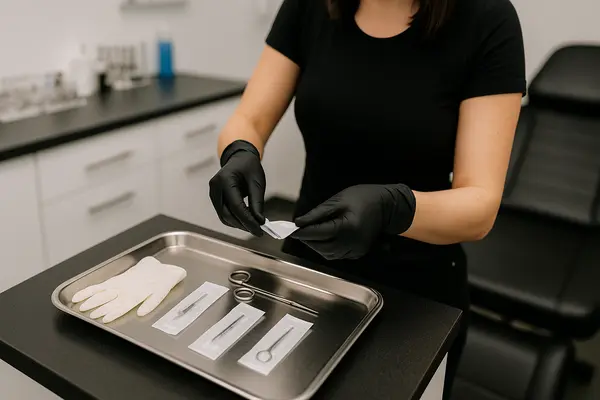
Certified Body Piercer Standards Document
1. Introduction
1.1 Purpose of This Document
This document details the competencies and standards required to achieve a Level 4 Qualification in Body Piercing, recognized by the BodyArt Qualification Authority (BAQA). It serves as a guide for training providers, learners, and industry stakeholders, ensuring that every certified body piercer practices ethically, safely, and with strong technical expertise.
1.2 Definition of a Certified Body Piercer
A Certified Body Piercer at Level 4 demonstrates:
- Advanced understanding of piercing theory, tools, anatomy, and safety procedures.
- Competence in strict sterilization, cross-contamination prevention, and aftercare guidance.
- Professional integrity and a commitment to BAQA’s Code of Conduct.
- Dedication to ongoing professional development and best practices within the bodyart community.
2. Entry Requirements
- Minimum Age: Learners must be at least 18 years old.
- Prior Knowledge/Experience: Candidates should have completed a foundational or Level 2/3 qualification in bodyart-related disciplines or demonstrate equivalent hands-on experience in a piercing or bodyart environment.
- Health & Safety Basics: Prospective learners must show a basic awareness of infection control protocols, hygiene, and local laws governing body piercing.
- Language Proficiency: Must be able to understand and communicate in the language of instruction to ensure clear client communication and safe practice.
3. Qualification Objectives
- Technical Mastery: Achieve advanced proficiency in piercing techniques, site assessment, jewelry selection, and safe handling of tools.
- Safety & Regulation: Reinforce robust knowledge of health and safety standards, local regulatory requirements, and client protection measures.
- Professional Conduct: Uphold ethical practices, respectful client interactions, and thorough record-keeping in alignment with BAQA’s values.
- Client Care & Aftercare: Provide exceptional consultation, procedure execution, and post-piercing guidance to foster trust and minimize complications.
4. Learning Outcomes & Competencies
Upon successful completion, learners will be able to:
- Anatomical Knowledge & Site Assessment
- Identify relevant anatomy for various piercing locations (e.g., ear cartilage, nostril, lip, navel, etc.).
- Assess contraindications (e.g., medical conditions, skin issues) and advise on appropriate piercing placement or alternatives.
- Sterilization & Infection Control
- Understand and apply approved sterilization procedures (e.g., autoclave usage, single-use needle protocols).
- Implement rigorous cross-contamination barriers (PPE, disposable consumables, surface disinfection routines).
- Equipment & Jewelry Selection
- Choose suitable needle sizes, clamps, forceps, and other piercing tools based on site anatomy and piercing style.
- Select hypoallergenic, biocompatible jewelry materials (e.g., implant-grade titanium, surgical steel, gold) to reduce allergic reactions and promote healing.
- Piercing Techniques
- Execute clean, precise needle insertions using correct angles and pressure to minimize tissue trauma.
- Adapt approach for different piercing types (e.g., lobe vs. cartilage, septum vs. nostril, surface vs. dermal).
- Manage client discomfort with recommended positioning, breath control, or legal topical numbing agents (where allowed).
- Client Consultation & Aftercare
- Conduct thorough pre-piercing consultations: assess medical history, skin conditions, and client expectations.
- Offer detailed aftercare guidelines, covering cleaning methods, potential signs of infection, and jewelry change timelines.
- Professional & Legal Responsibilities
- Comply with BAQA’s Code of Conduct and local licensing requirements.
- Maintain accurate client records, including consent forms and medical disclaimers.
- Respect client confidentiality, data protection laws, and safe disposal of clinical waste.
- Communication & Business Skills
- Demonstrate effective client communication, from initial inquiry to post-procedure follow-up.
- Understand basic studio operations: inventory management, scheduling, pricing, and ethical advertising.
5. Course Structure & Modules
A Level 4 Body Piercing program typically includes theoretical classes, practical demonstrations, and supervised hands-on sessions. Core modules often comprise:
- Module 1: Advanced Health & Safety
- In-depth infection control, sterilization, and cross-contamination prevention
- PPE, sharps disposal, and local legal guidelines for piercing studios
- Module 2: Anatomical Considerations & Piercing Sites
- Detailed study of ear, facial, oral, and body piercings
- Anatomy-based best practices for marking, angle selection, and site mapping
- Module 3: Tools & Equipment
- Comparison of piercing needles, cannula needles, forceps, clamps, and specialized instruments
- Maintenance protocols for reusable tools and understanding disposable options
- Module 4: Piercing Techniques & Styles
- Step-by-step procedure training for popular piercings (e.g., lobes, tragus, helix, septum, lip)
- Surface piercings, dermal anchors, and advanced or less common piercings
- Module 5: Jewelry Knowledge & Aftercare
- Materials: titanium, steel, niobium, gold, plastic alternatives
- Proper sizing for initial piercings, healing considerations, and recommended aftercare products
- Module 6: Client Consultation & Ethics
- Managing consultations, consent forms, and liability
- Client privacy, risk disclosure, and addressing special needs or sensitivities
- Scenarios: underage considerations (local laws), dealing with anxious clients, or refusing unsafe requests
- Module 7: Professional Development & Studio Management
- Business basics, appointment scheduling, and cost analysis
- Branding, marketing (online presence), and building a professional portfolio
- Networking, continued education, and staying abreast of industry innovations
6. Assessment & Evaluation
6.1 Assessment Methods
- Written Exams & Assignments
- Theory-based questions assessing knowledge of safety guidelines, anatomy, legal aspects, and aftercare principles.
- Practical Observations
- Real or simulated piercing procedures under supervision to evaluate technique, hygiene, and client interaction.
- Use of a standardized checklist to rate performance quality, safety compliance, and communication.
- Portfolio Submission
- Documentation of completed piercings (photos, client feedback, reflective practice logs).
- Evidence of consistent adherence to sterilization protocols and aftercare follow-up.
- Oral / Viva Voce
- Learners discuss case studies, justify technique choices, and demonstrate understanding of complex scenarios (e.g., hypertrophic scarring, unusual anatomy).
6.2 Grading & Feedback
- Pass / Merit / Distinction or a similar grading framework, depending on the accrediting body’s approach.
- Comprehensive feedback pinpointing learner strengths, any competency gaps, and recommended development areas.
- Retest or reevaluation opportunities for those needing further practice or theoretical reinforcement.
7. Certification & Awarding
After successfully meeting all assessment requirements:
- Level 4 Qualification in Body Piercing – Certified Body Piercer certificate is awarded with BAQA’s seal.
- Recipients may use the BAQA Certified Body Piercer title and display the qualification on professional marketing materials (subject to brand usage guidelines).
- Graduates may appear in BAQA’s registry of certified practitioners (where permissible by local data privacy laws).
8. Continuing Professional Development (CPD)
A Certified Body Piercer at Level 4 is encouraged to:
- Pursue Advanced Workshops: Expand into specialized piercings, microdermals, advanced jewelry options, or emerging technique innovations.
- Attend Industry Events: Participate in conventions, seminars, or peer forums to stay current on best practices and new technologies.
- Stay Informed on Regulations: Monitor updates in local or international legislation, health department advisories, or product material innovations.
9. Quality Assurance & Periodic Review
To maintain high standards and reflect industry developments, BAQA and its accredited institutions:
- Regularly Update Curricula: Integrate new research, updated safety protocols, and relevant cultural or client-driven trends.
- Instructor Qualifications: Ensure teaching staff renew their credentials, engage in continuous learning, and demonstrate advanced proficiency.
- Feedback & Surveys: Solicit learner, instructor, and employer evaluations to refine course delivery, resources, and overall efficacy.
10. References & Supporting Documents
- BAQA Code of Conduct
- Local Health Department Regulations
- Applicable national or regional occupational health and safety requirements
- Professional Body Piercing Research & Trade Journals
- Manufacturer Guidelines for Piercing Equipment and Jewelry
Conclusion
The Level 4 Qualification in Body Piercing – Certified Body Piercer designation underscores a practitioner’s advanced ability to pierce safely, ethically, and expertly. By adhering to these standards, certified professionals protect client well-being, advance the body piercing craft, and contribute to a globally respected community of bodyart specialists.
“Achieving BAQA’s Level 4 Body Piercing Certification isn’t just about technique—it’s a pledge to uphold uncompromising safety, respect, and continuous innovation in every piercing procedure.”
— BAQA Piercing Certification Committee