
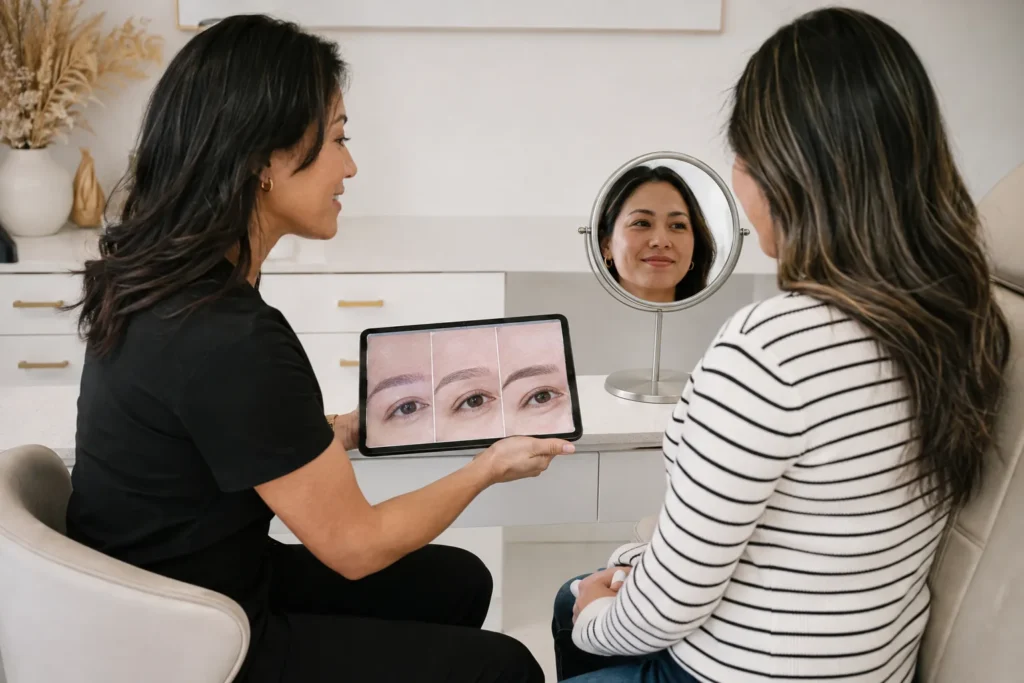
Unwanted, changed or difficult existing PMU should not automatically lead to “one more pass.” First separate appearance goals, product history, tissue or symptom concerns, correction options, removal options and the scopes of the people involved.

Decision sequence
- Stop for urgent or unexplained symptoms. Use an appropriate healthcare route rather than seeking a cosmetic correction first.
- Define the concern. Separate colour, shape, density, asymmetry, fading, scarring, texture, discomfort and dissatisfaction; different concerns require different competence.
- Gather the record. Ask for dates, procedure, products and batches, photographs, aftercare, previous corrections and any removal history.
- Check scope and local permission. A practitioner competent in new PMU is not automatically competent in complex correction, removal or work linked to a health condition.
- Discuss all reasonable routes. These may include waiting, declining further work, referral, cosmetic correction or an appropriately assessed removal route.
- Document a new consent decision. Explain uncertainty, likely stages, price, limits, aftercare and the possibility that the objective cannot be achieved as requested.
Useful evidence
- Clear unfiltered photographs in consistent lighting.
- The original and subsequent procedure dates.
- Known pigment, shade, batch or lot and device information.
- The original design and consent record where available.
- A written account of healing, changes, concerns and prior advice.
High-risk claims
- Guaranteed complete removal or a fixed number of sessions.
- A promise that additional pigment will always neutralise or cover the existing work.
- Diagnosis or medical treatment claims from someone without the relevant professional authority.
- Proceeding over symptoms, damaged tissue or unresolved suitability questions.
- Destructive do-it-yourself removal products or instructions.
Important boundary: This is general education, not an individual suitability decision, diagnosis, treatment plan or legal opinion. Permanent makeup and related services interact with living tissue. Practitioners must work within their training, insurance and local permission; clients with symptoms or health questions should use an appropriate healthcare service.
Guidance edition: 1.0. Reviewed: . Review sooner if material evidence, product information or law changes.